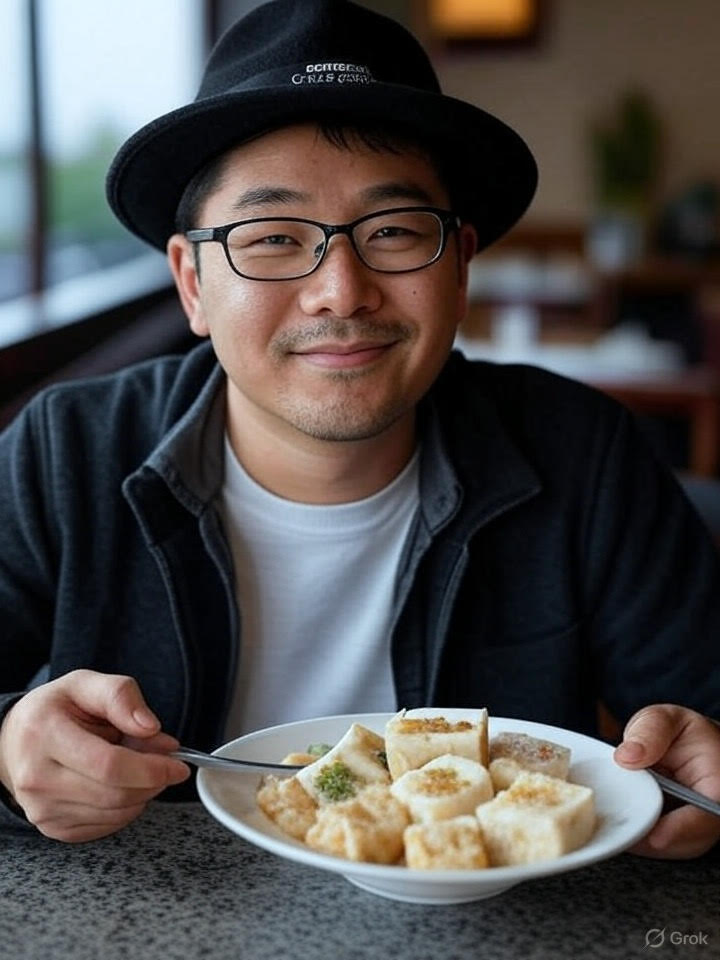

From a Small House in Rural Thailand
Japanese Cuisine Made in Thailand: Nikogori (Aspic)
15 min prep, 4 hours chill
Serves 4-6

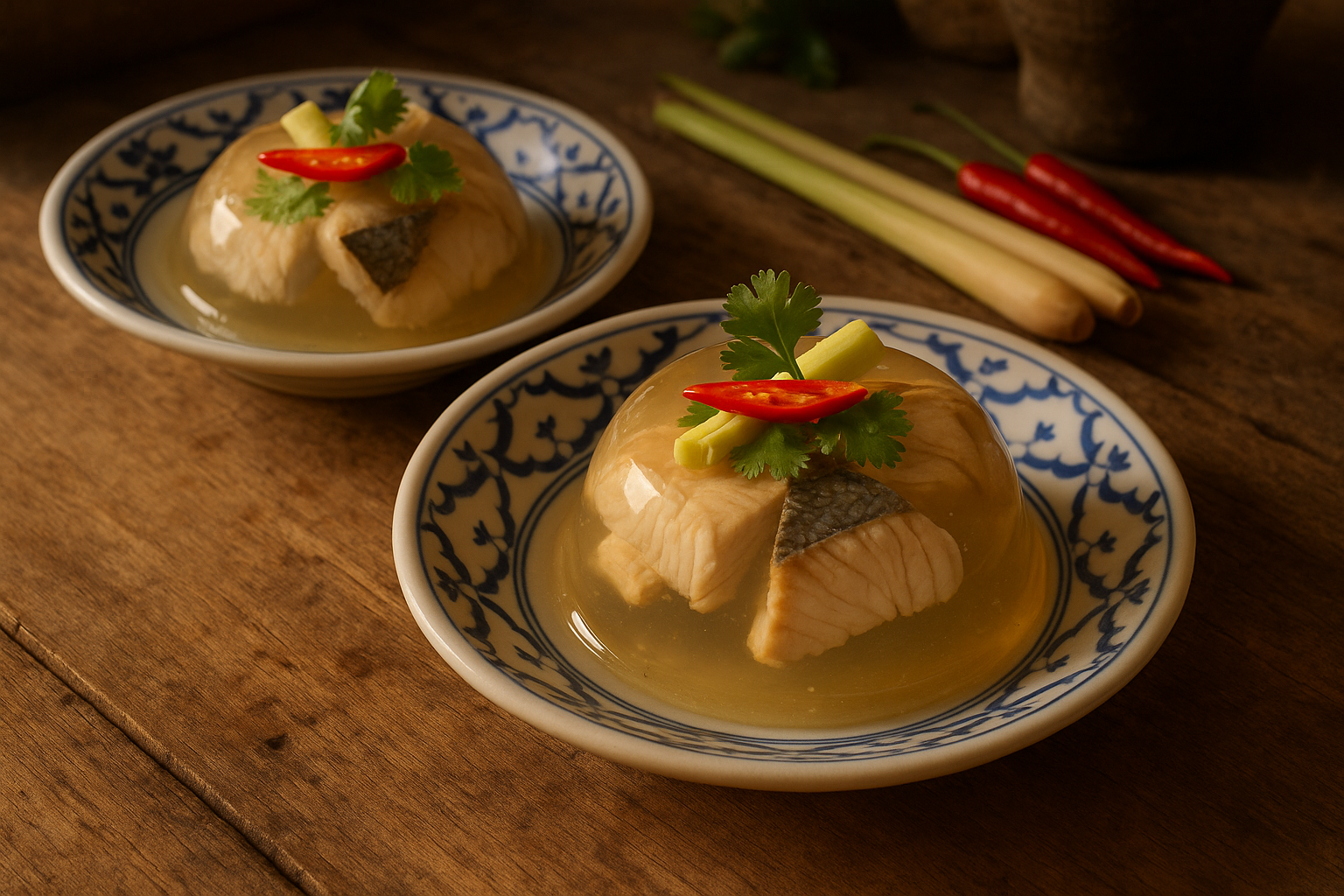
Greetings from my little kitchen in rural Thailand! Today I’m sharing something truly special – a beautiful fusion of Japanese culinary artistry and Thai countryside charm. Nikogori, the elegant Japanese aspic that transforms simple fish broth into a crystal-clear delicacy, has found a delightful new home in our tropical kitchen.
Living here in the Thai countryside, far from fancy Japanese restaurants, I’ve discovered that some of the most authentic flavors come from adapting traditional techniques to local ingredients. This nikogori recipe celebrates that beautiful marriage of cultures – using fresh fish from our local markets and time-honored Japanese methods passed down through generations.
Fun Fact: Nikogori literally means “simmered and hardened” in Japanese, perfectly describing this gel-like delicacy that captures all the umami goodness of a well-made fish broth.
The Magic of Japanese Aspic
If you’ve ever watched the beloved Japanese drama “Midnight Diner” (Shinya Shokudo), you might recognize this dish. The show beautifully captures how simple, traditional foods can bring people together and tell stories of comfort and connection. Let me take you on that same journey with this recipe.
Featured in Midnight Diner Drama

Watch how nikogori brings comfort and nostalgia in this classic Japanese drama scene.
What makes nikogori so special isn’t just its delicate appearance – it’s the way it concentrates all the deep, savory flavors of a perfectly simmered fish broth into each translucent bite. In Thailand, where we appreciate both subtle flavors and beautiful presentation, this dish fits perfectly into our culinary landscape.
The process might seem intimidating at first, but trust me, it’s surprisingly forgiving. The key is patience and understanding that the natural gelatin from fish bones and skin will work its magic as the broth cools. No artificial thickeners needed – just pure, natural transformation.
Ingredients You’ll Need
For the Broth:
- 1 whole fresh fish (about 800g) – snapper or sea bass work beautifully
- 2 stalks lemongrass (Thai touch!)
- 3-4 kaffir lime leaves
- 1 thumb-sized piece ginger, sliced
- 1.5 liters water
- 3 tablespoons sake or rice wine
For Seasoning:
- 2 tablespoons light soy sauce
- 1 tablespoon mirin
- 1 teaspoon salt
- White pepper to taste
For Garnish:
- Fresh cilantro leaves
- Thinly sliced red chilies
- Lime wedges
Thai Adaptation Tip: The addition of lemongrass and kaffir lime leaves gives our nikogori a subtle Southeast Asian fragrance that complements the traditional Japanese technique beautifully!
The Cooking Journey
Prepare the Fish
Clean your fish thoroughly, removing scales but keeping the skin on. The skin contains precious gelatin that will help our nikogori set perfectly. Cut the fish into large pieces, keeping the head and bones – they’re flavor goldmines!
Create the Aromatic Base
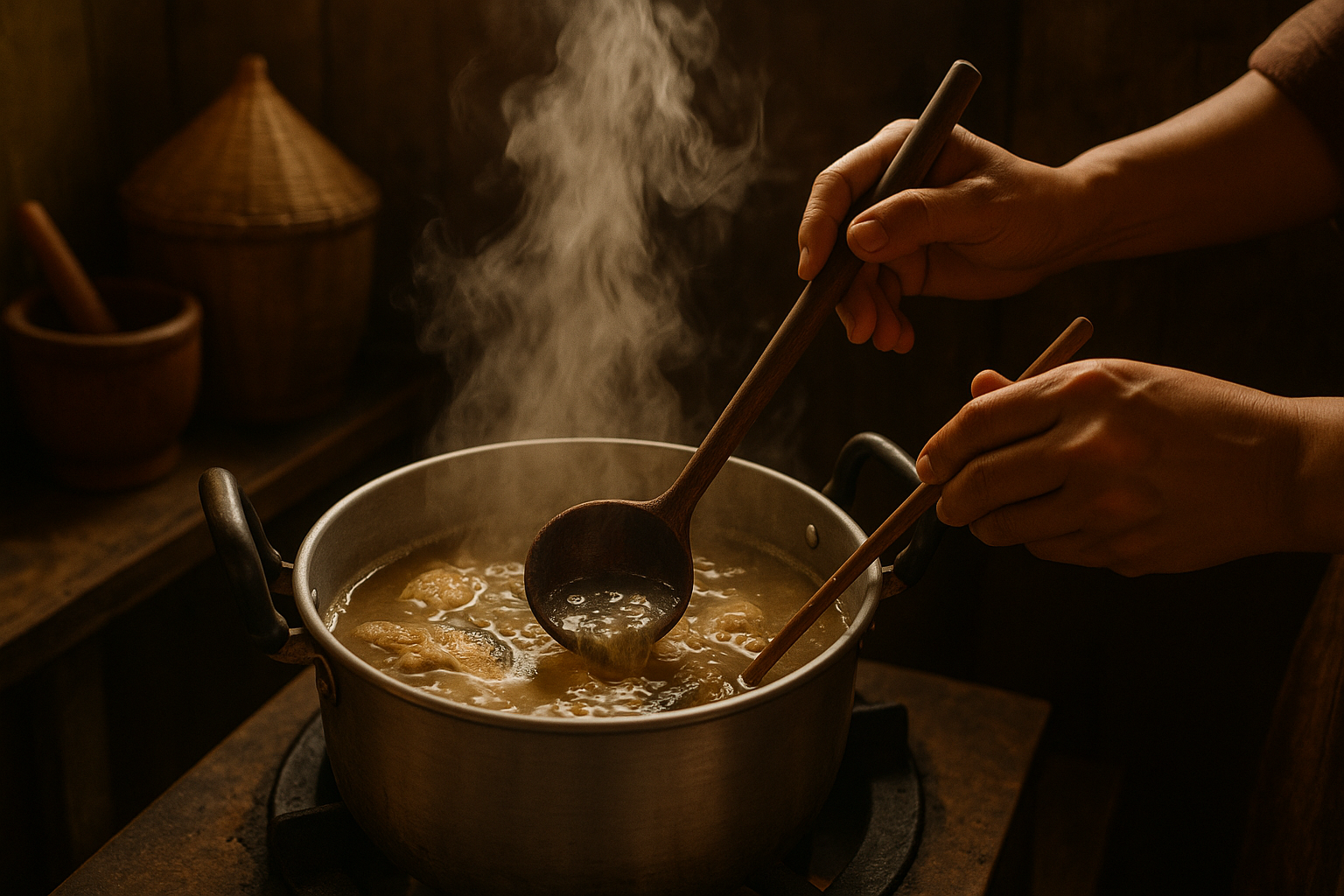
In a large pot, combine water with lemongrass stalks (bruised with the back of a knife), kaffir lime leaves, and ginger slices. This Thai-inspired aromatics base will infuse our broth with layers of complexity while maintaining the Japanese essence.
The Gentle Simmering
Add the fish pieces to the pot and bring to a gentle boil. Then immediately reduce the heat to the lowest setting. This is crucial – aggressive boiling will make your broth cloudy. We want crystal-clear perfection! Simmer for 45 minutes, occasionally skimming any foam that rises to the surface.
Strain and Season
Carefully strain the broth through a fine-mesh sieve lined with cheesecloth. Reserve the fish meat, removing any bones. Season the clear broth with soy sauce, mirin, salt, and a pinch of white pepper. Taste and adjust – the flavor should be savory but not overwhelming.
Assembly and Setting
Flake the reserved fish meat and distribute it evenly among your serving dishes or one large container. Pour the warm, seasoned broth over the fish. Allow to cool to room temperature, then refrigerate for at least 4 hours or overnight.
The Magical Transformation
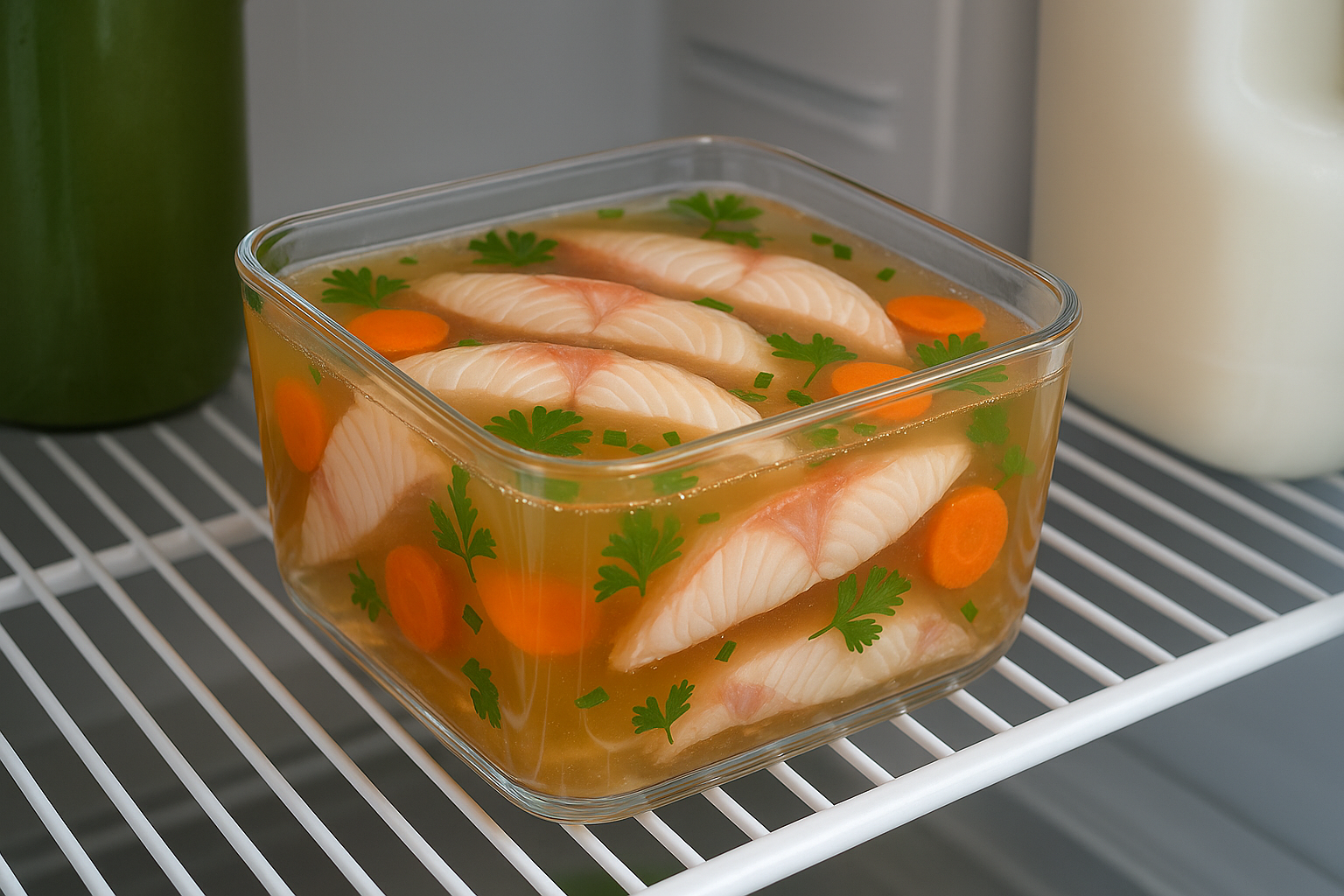
Here’s where the magic happens! As your nikogori cools in the refrigerator, the natural gelatin from the fish bones and skin slowly transforms the liquid broth into a beautiful, translucent gel. It’s like watching nature’s own molecular gastronomy at work.
The waiting can be torture – I know! But this is where patience pays off. In our tropical Thai climate, I always make sure the refrigerator is nice and cold. Sometimes I even place the containers on the bottom shelf where it’s coolest. After about 2-3 hours, you’ll start to see the edges beginning to set, and by 4 hours, you’ll have perfect, jiggly nikogori ready to serve.
Temperature Tip: In Thailand’s heat, I sometimes place my nikogori containers in a larger bowl with ice water for the first hour before refrigerating. This helps it set faster and more evenly!
Serving with Thai Flair
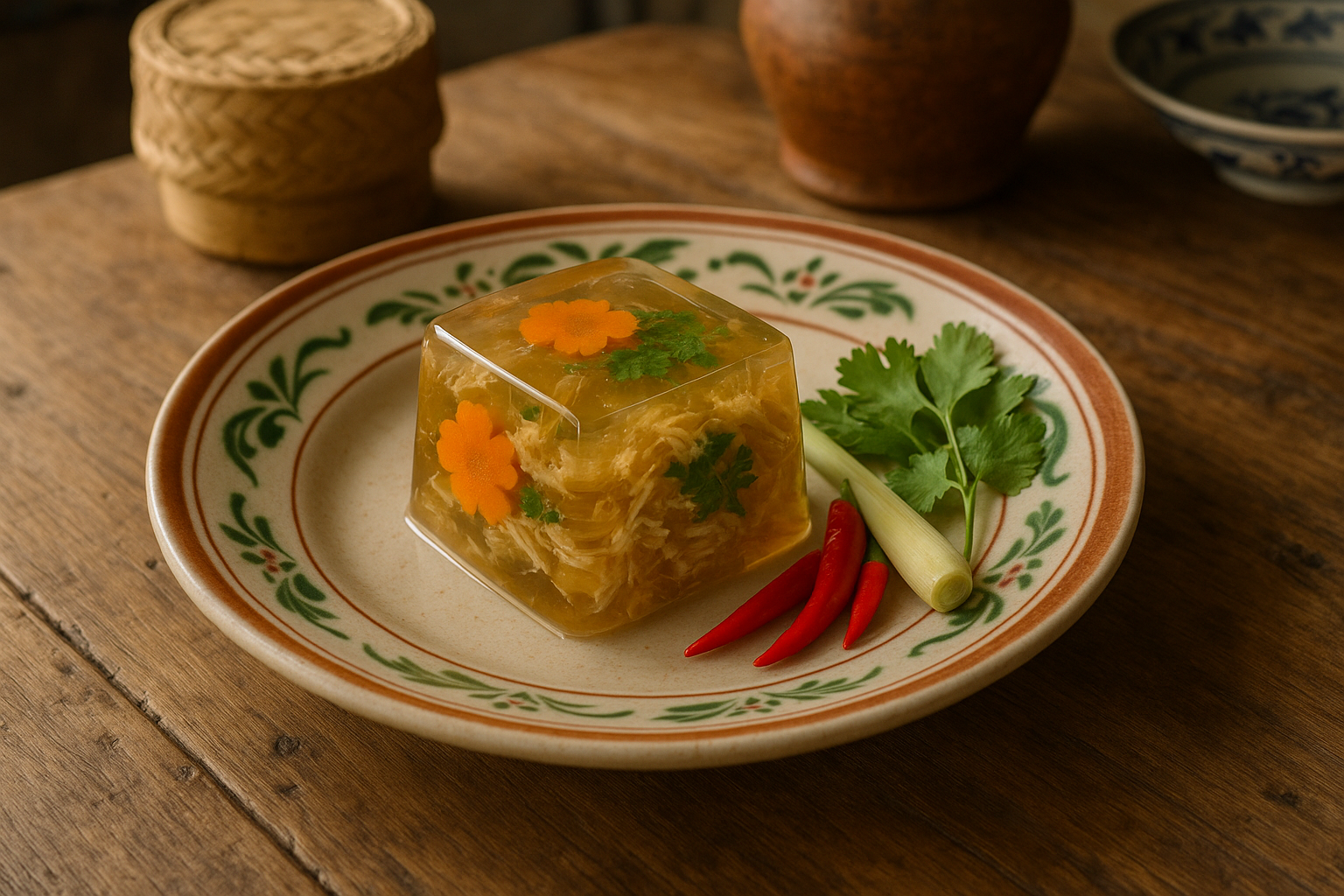
When it’s time to serve, I love to add a touch of Thai presentation style. Cut your nikogori into neat squares or use a spoon to scoop elegant portions onto individual plates. The traditional Japanese way is beautifully simple, but here in Thailand, we can’t resist adding a bit of color and freshness.
I garnish each serving with fresh cilantro leaves (a Thai favorite!), a few thin slices of red chili for that pop of color, and a lime wedge on the side. The lime juice adds a bright acidity that cuts through the rich, gelatinous texture beautifully – it’s become my signature touch that guests always remember.
Traditional Japanese Way
Serve simply with a small dish of soy sauce for dipping and perhaps some pickled vegetables on the side.
Thai Fusion Style
Add fresh herbs, chili slices, lime wedges, and serve with jasmine rice for a heartier meal.
Pro Tips from My Thai Kitchen
Success Secrets:
- Use fish with lots of natural gelatin (head, bones, skin)
- Keep the simmer gentle to maintain clarity
- Strain multiple times for crystal-clear results
- Cool completely before refrigerating
Troubleshooting:
- Not setting? Add gelatin powder as backup
- Cloudy broth? Strain through coffee filters
- Too salty? Dilute with more neutral broth
- Bland flavor? Reduce broth before cooling
My Secret: I always make extra broth and freeze it in ice cube trays. These “flavor bombs” are perfect for adding instant umami to soups and stir-fries later!
A Bridge Between Cultures
Living in rural Thailand and cooking Japanese food has taught me that the best recipes are bridges between cultures. This nikogori represents everything I love about both culinary traditions – Japan’s attention to technique and subtle flavors, combined with Thailand’s love for fresh herbs and bold, bright accents.
When I serve this to my Thai neighbors, they’re always amazed by the texture and the way the flavors develop on the palate. When Japanese friends visit, they’re delighted by the familiar technique with unexpected tropical notes. Food has this incredible power to transcend boundaries and create connection.
The process of making nikogori is meditative too. There’s something deeply satisfying about the slow simmer, the patient waiting, and the magical transformation that happens in the refrigerator. In our fast-paced world, this dish reminds us that some of the best things in life require time and patience.
“Cooking is not just about following recipes – it’s about understanding the soul of a dish and making it your own while respecting its origins.”
– From my kitchen in rural Thailand
Final Thoughts
This nikogori recipe has become one of my signature dishes here in Thailand, and I hope it brings you as much joy as it has brought me. Whether you follow the traditional Japanese method or add your own cultural touches like I do, the key is to cook with love and patience.
Don’t be discouraged if your first attempt isn’t perfect – even in Japan, nikogori is considered a dish that improves with practice. Each time you make it, you’ll understand the process a little better, and soon you’ll be creating your own variations and family traditions.
I’d love to hear about your nikogori adventures! Did you try the Thai fusion garnishes? Did you experiment with different fish or add your own cultural touches? Food is meant to be shared, and so are the stories that come with it. Until next time, happy cooking from my little kitchen in rural Thailand!
•
Made with love in Thailand
•
Worth every minute